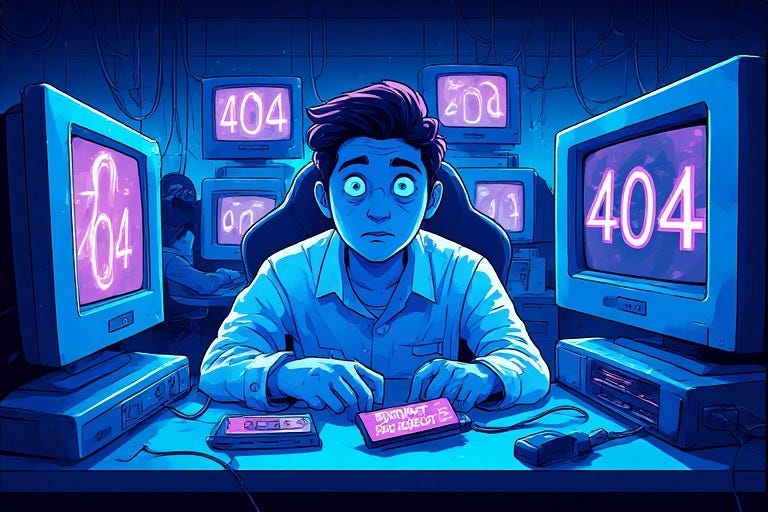
The reality behind the skills, salary, and job titles
Most people enter IT with a simple picture in mind.
Good salary. Stable job. Air-conditioned office. Respect.
That picture is not wrong.
But it is incomplete.
What no one tells you is that IT is not just a career of learning tools. It is a career of handling pressure, uncertainty, constant change, and silent responsibility. If you are not ready for that part, the job can slowly drain you even when everything looks fine on paper.
This article is not meant to scare you.
It is meant to prepare you.
The First Truth: Learning Never Stops, and That Sounds Easy Until You Live It
People say this line very casually.
“In IT, you have to keep learning.”
What they do not explain is what that really means.
It means your skills can become outdated even if you are good at your job.
It means weekends sometimes go into reading, testing, or fixing something you did not break.
It means the feeling of being a beginner comes back again and again.
In many jobs, experience slowly makes work easier.
In IT, experience gives confidence, but the work keeps changing.
New tools come. Old tools disappear.
What was in demand five years ago may not matter today.
This does not mean IT is unstable.
It means comfort zones do not last long here.
The Second Truth: Most of the Stress Comes From Responsibility, Not Workload
People outside IT think the stress comes from long hours or tight deadlines.
That is only part of it.
The real stress comes from knowing that your mistake can affect many people.
A wrong change. A missed alert. A small oversight.
When systems fail, users do not see the effort behind the scenes.
They only see that something is not working.
And when things work perfectly, no one notices.
Silence usually means success in IT.
This creates a strange pressure.
You are always preparing for problems that may never happen.
And when they do happen, they expect quick answers.
The Third Truth: IT Is Less About Typing Commands and More About Thinking Clearly
Many beginners focus on commands, tools, and certifications.
Those things matter.
But they are not what make someone reliable.
Real work is about understanding how things connect.
Why does one change affect another system?
Why a small warning today can become a big issue tomorrow.
This kind of thinking takes time.
And it cannot be rushed.
You will see people who know many tools but struggle when something unexpected happens.
You will also see people who know fewer tools but stay calm and solve problems step by step.
That difference is rarely talked about.
The Fourth Truth: Growth Is Not Always Visible or Fast
In IT, progress can feel slow and confusing.
You may work hard for years and still feel behind.
You may compare yourself with others and feel you are missing something.
Social media makes this worse.
People share promotions, salaries, and achievements.
They do not share doubt, confusion, or mistakes.
What you do not see is that many careers grow quietly.
Through incidents handled.
Through systems stabilized.
Through trust built with teams.
Not every growth comes with a title change.
Some growth only shows when things go wrong, and you know what to do.
The Fifth Truth: Soft Skills Matter More Than You Expect
This surprises many technical people.
Communication.
Listening.
Explaining issues in simple words.
Writing clear messages under pressure.
These skills decide how far you go.
You may fix a problem perfectly, but if you cannot explain it, others may not trust the fix.
You may know the root cause, but if you sound unsure, people may ignore it.
IT is a team job.
You work with users, managers, developers, and vendors.
Being technically right is not always enough.
Being clear and calm matters just as much.
The Sixth Truth: Burnout Does Not Always Look Like Collapse
Burnout in IT is often silent.
You still do your job.
You still attend meetings.
You still fix issues.
But curiosity fades.
Patience becomes thin.
Everything feels repetitive and heavy.
This usually happens when learning turns into pressure instead of interest.
When responsibility grows, but rest does not.
When appreciation is rare, and expectations are constant.
Many people leave IT not because they cannot do the work, but because they are tired of carrying invisible weight.
The Last and Final Truth: IT Can Be a Great Career If You Enter With Open Eyes
Despite everything, IT is still a powerful career.
It gives you problem-solving skills that apply everywhere.
It teaches you how systems behave, not just machines, but people and processes too.
It rewards curiosity and patience over time.
But it is not a shortcut career.
And it is not a comfortable career.
If you choose IT, choose it knowing that confusion is normal, pressure is real, and learning never ends.
Choose it because you enjoy understanding how things work and fixing what is broken.
Not because someone told you it is easy.
Because no one tells you this before you choose a career in IT.
Writer : Pawan Natekar
— Bhuwan Chettri
CodeToDeploy is a tech-focused publication helping students, professionals, and creators stay ahead with AI, coding, cloud, digital tools, and career growth insights.